How Ministry of Supply Saved $170,000 and Regained Control of Their Store
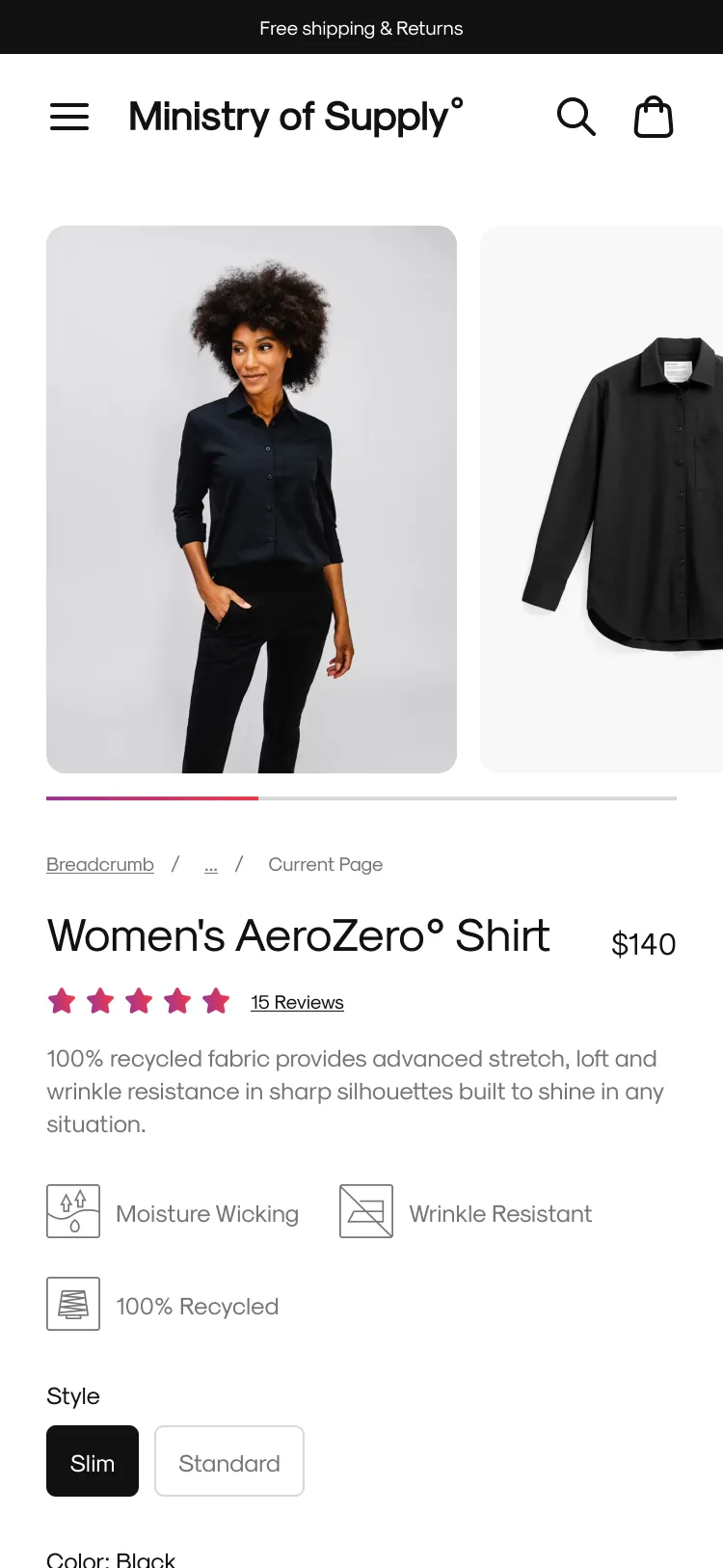
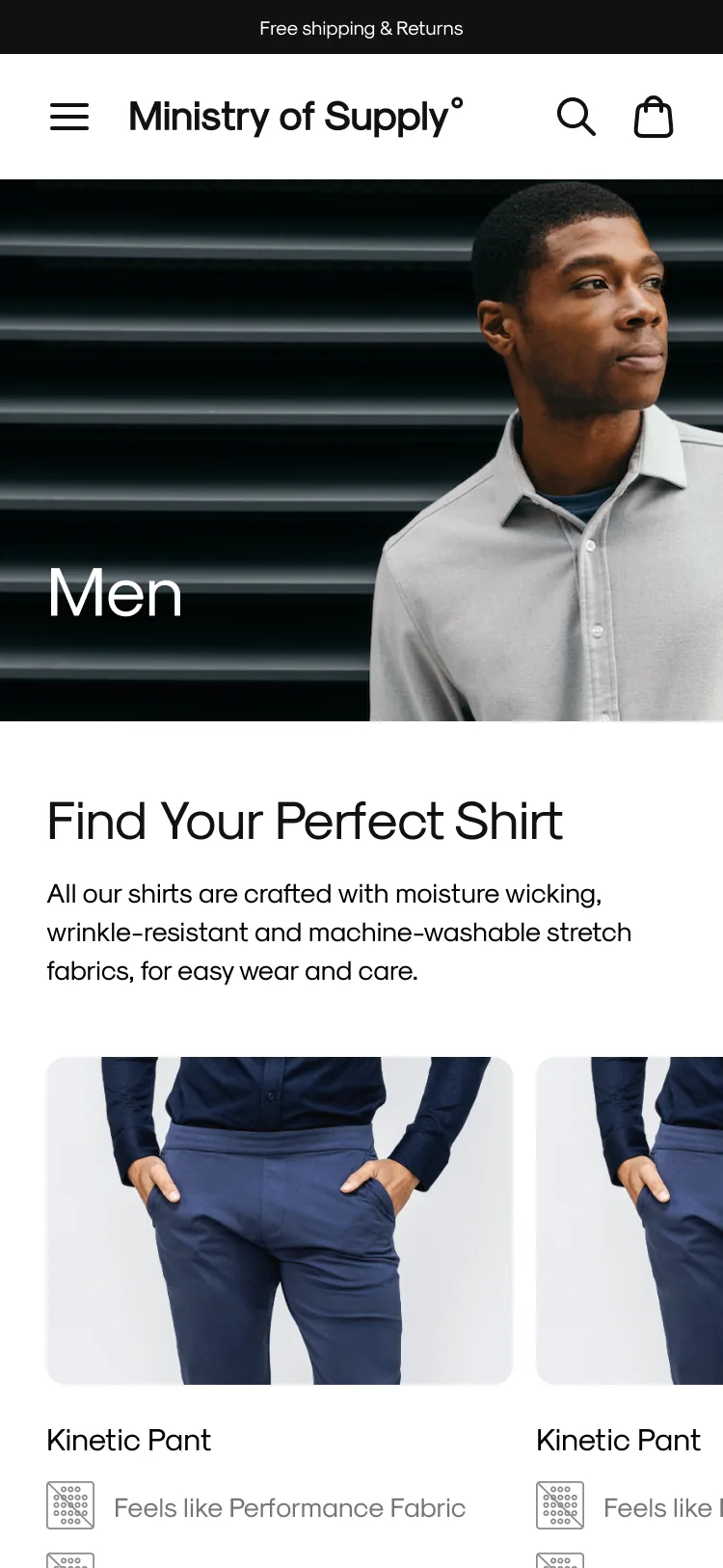
Ministry of Supply makes performance professional apparel. The brand has been around for 12-plus years, and over that time their ecommerce setup has gone through just about every major platform shift the industry has seen. Their most recent store was a headless Shopify build run by an outside development agency. It offered control, but it came with locked code, a slow sprint cycle, and a $170,000/year development bill. They moved to Platter to get back to something their own team could actually run.
- $170,000 saved in annual development costs
- 95% of site changes now handled internally
- Shifted from a quarterly sprints to bi-weekly releases


The Challenge
Ministry of Supply has been running ecommerce for over a decade. Their platform history is basically a map of how the industry shifted over that time. They started on Shopify, moved to Magento when SKU management made it necessary, came back to Shopify, and eventually went headless with an outside development agency running the build.
Going headless made sense when they did it. It promised tighter control over third-party integrations and a more custom front-end than a standard theme could give them. In practice, it came with a catch.
The agency controlled the codebase. Any change, even something minor like updating a button style, had to go through a formal process: design it, scope it, test it, make sure it integrated with the rest of their tech stack. What should have taken an afternoon took a month.
“If we want to change a button style on our website tomorrow, we can do that in our current experience. But before, that would require like a month of preamble. Let’s design it out, let’s test it, so on and so forth. That just wasn’t moving at the speed at which we needed to.”
There was also a CMS layer sitting between the front-end and Shopify that enforced rigid image dimensions and content structures. If a component was built for a 300x500 image, that’s what it took. Resizing anything meant going back into the development queue.
On top of the process friction, the setup cost $170,000 per year to maintain. And because everything ran on a quarterly sprint calendar, new features got batched into large releases. Bigger releases mean more things to test, more ways something can break, and a longer wait between an idea and it actually reaching customers.
When the site went down, there was no safety net. A standard Shopify store going offline is Shopify’s problem and every merchant is in the same boat. A headless site going down is just yours.
“When your store is down and you’re trying to fast-track it during the holiday times, that is the most grueling thing, where you’re just like, I wish I was just on Shopify.”
The team had been planning to move back to a headed setup for a while. The question was how to do it without ending up in the same situation with a different agency.
The Solution
Ministry of Supply needed a partner who would build the store and then hand the keys over, not one that kept them in a queue every time they wanted to make a change.
Keys to the castle
The main thing Geraldo, Co-Founder and Creative Director at Ministry of Supply, was looking for was being able to go into the theme and make changes himself without a formal process every time. His team needed to move at the speed of the business.
Platter’s approach was to be highly involved during the initial build and hand over control as quickly as possible. For more technical work that comes up, Platter stays available in the background.
“For 95% of the things that we want to get done, we’re not getting caught up in a multi-sprint-length process to get something live.”
A more agile, iterative launch process
Before, features piled up in a queue and got bundled into a large quarterly release. Waterfall process, lots of coordination, things sitting in line for weeks before going live.
Now the team ships on a bi-weekly cadence and can push individual changes any time they need to. Smaller releases have fewer moving parts, fewer things that can go wrong, and ideas make their way to the storefront faster.
“Before, we were shipping new themes every two weeks or so, because that’s the way the waterfall process allowed. Now we can push a theme live at 12:17pm on a Thursday because we want to. That’s the flexibility we needed.”
A development team you share with other stores
Being on Platter’s shared theme works in a similar way to being on Shopify itself. When Platter builds a new feature or improvement for any store in the network, it rolls into the shared theme that every store benefits from. You’re not paying for a private agency engagement where your budget only funds your own work.
“Anytime you guys do development on one store, we get that as well. It’s like a rising tide lifts all boats kind of thing. That’s what’s great.”
For Geraldo, that reframes what Platter actually is. He views it as access to a development team whose work compounds across every stores they work with.
Headless-like speed without the headless infrastructure
When brands move off headless, the worry is always speed. We addressed that directly by layering Nostra into the Ministry of Supply build as a dedicated performance layer.
As the site grew heavier with more apps, richer imagery, and new functionality, Nostra’s edge delivery kept pages fast. We A/B tested it against a holdout group to measure real impact on speed and revenue.
Ministry of Supply saw a 30% lift in site speed and an 8% increase in conversion rate.
The Results
Since moving to Platter, Ministry of Supply has cut costs, increased speed, and regained control of their store.
- $170,000/year saved compared to their previous headless setup
- Moved from a quarterly sprint calendar to bi-weekly releases
- 95% of site changes now handled internally, without outside development help
For Geraldo, the most telling sign was what happened right after the store went live.
“It wasn’t shipping 1.0 that we were stoked about. It was shipping 1.1 maybe an hour or two later, and then 1.2 two hours after that. That was not possible in the headless version of our site.”

Gihan Amarasiriwardena
Co-founder, Ministry of Supply
Conclusion
Geraldo’s take on headless is that it makes sense in fewer and fewer situations. If you’ve genuinely hit the limits of what Shopify can do natively and have the budget to support a custom stack, go for it. But for most stores, those conditions don’t apply.
For Ministry of Supply, the move to Platter wasn’t just about cutting the development bill. It was about getting back to a setup where their team could ship things on their own terms.
“It’s the wrong way to look at the Platter relationship as an additional cost. Think of it much more as a highly equipped, on-call development team.”
The Platter Difference














.svg)


.svg)













-1.png)



.svg)
.svg)
